
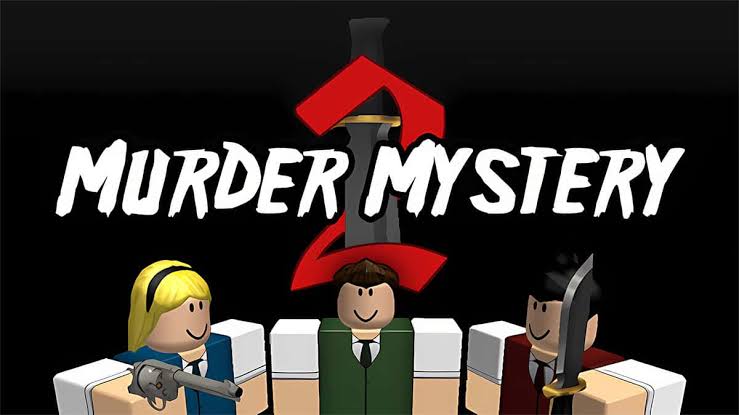






1. The Round Begins Before Anyone Has Enough Evidence to Trust Anyone
Every round of Murder Mystery 2 starts with uncertainty, yet players rarely remain neutral for long because even the first few seconds create impressions. Someone follows too closely, another player repeatedly changes direction, while a third stands near an exit as though they are already preparing to escape, and none of these actions proves anything, although they immediately influence how safe each person feels.
This is what gives the opening its tension. The Murderer has not necessarily attacked, the Sheriff may not have revealed the gun, and the Innocents possess no confirmed information, but everyone is already interpreting movement. A player who approaches directly can appear threatening, while someone keeping too much distance may look equally suspicious because caution can resemble concealment.
Experienced players understand that innocence and trust are not the same thing. Being an Innocent does not automatically make other people feel safe around you, especially when your movements resemble someone searching for an isolated target. Likewise, the Murderer can survive longer by behaving in ways the lobby associates with ordinary caution rather than obvious aggression.
The first stage of each round is therefore not empty waiting. It is a social sorting process where players quietly decide who deserves distance, who can be followed, and whose behavior should be remembered if something goes wrong.
2. The Murderer’s Greatest Weapon Is Often Looking Busy Instead of Looking Dangerous
A Murderer who attacks immediately may remove one player quickly, but the action can expose their identity before they have enough control over the rest of the map. The stronger approach often involves appearing occupied with the same concerns as everyone else, moving through public areas, collecting coins, avoiding suspicious proximity, and reacting to danger in ways that resemble an Innocent.
This performance matters because lobbies usually judge behavior before they see the weapon. Someone who moves calmly through populated spaces can become socially invisible, while a player who constantly searches corners or follows isolated targets may attract attention even without attacking.
The Murderer must therefore balance opportunity with credibility. Waiting too long gives the Sheriff and experienced Innocents more time to organize, yet acting too early can turn the entire lobby into a coordinated escape. A successful attack is not simply one that eliminates a target, because it also needs to preserve uncertainty about what happened and where the threat went afterward.
Bodies complicate this balance because every elimination creates information. A victim found in a narrow corridor suggests the Murderer recently passed through that area, while several disappearances near the same route can make nearby players immediately suspicious. The Murderer must keep moving without appearing to flee from evidence they created.
The best rounds often belong to players who understand that hiding the knife is only the beginning. The harder task is preventing ordinary movement from revealing the intention behind it.

3. Innocents Survive Longer When They Maintain Options Instead of Simply Running Away
Innocents have no direct weapon at the beginning of the round, which can make survival feel dependent on identifying the Murderer quickly and keeping as much distance as possible. Distance helps, but moving to the farthest available corner can create another problem if the location has only one exit or provides no useful view of approaching players. Good survival positioning preserves choices.
A room with several routes gives the player more ways to respond when someone enters, while an elevated or open area may provide enough visibility to recognize danger before it becomes unavoidable. Narrow corridors can be useful for tracking movement but dangerous when another player blocks the only escape path.
This changes how Innocents should interpret safety. A quiet area is not always secure because isolation removes witnesses and may make the player an easy target. Crowded spaces provide information and temporary protection, although they can become chaotic once the Murderer attacks and everyone attempts to escape through the same route.
Experienced players continuously adjust according to what the lobby currently knows. Before the Murderer is identified, they preserve distance from everyone. After the first attack reveals the threat, they begin choosing routes based on the confirmed location and likely movement of the Murderer. Survival is therefore less about finding one perfect hiding place and more about avoiding positions where one wrong guess removes every remaining option.
4. The Sheriff Becomes More Vulnerable the Moment the Lobby Knows Where the Gun Is
The Sheriff appears to hold the strongest role because the gun can end the round immediately when used correctly, but that power creates pressure because revealing it changes the priorities of every player. Innocents may gather nearby for protection, while the Murderer gains a clear objective and can begin shaping movement around removing the only direct threat.
Keeping the gun hidden preserves uncertainty. The Murderer cannot easily determine who must be targeted first, and Innocents are less likely to crowd the Sheriff or expose the role through their behavior. Once the weapon appears, the Sheriff becomes the center of the round even if no shot is fired.
This creates a difficult timing decision. Drawing too early may reveal useful information without creating a realistic opportunity, while waiting too long can allow the Murderer to approach before the Sheriff has enough space to react. A good Sheriff needs visibility, distance, and a clear understanding of which player has actually been confirmed rather than merely accused.
The cost of a mistaken shot makes social information especially dangerous. Confident players may point toward someone suspicious, chat accusations can spread quickly, and a nervous Innocent may move in ways that resemble aggression, yet none of these signals guarantees guilt. The Sheriff’s challenge is not simply aiming accurately. It is deciding when the available information is strong enough that acting becomes safer than continuing to wait.

5. A Dead Body Changes the Meaning of Every Nearby Player
Before an elimination is discovered, players can move through an area without much attention. Once a body appears, the same location becomes evidence, and everyone nearby is judged according to where they came from, how quickly they leave, and whether their reaction matches what others expect from an Innocent.
This makes bodies one of the most important information sources in Murder Mystery 2 despite revealing very little by themselves. They confirm that the Murderer acted somewhere nearby, but they do not explain when the attack occurred, where the killer moved afterward, or whether the person who found the body was actually present during the elimination.
Experienced Murderers can exploit this ambiguity by remaining near the scene and appearing surprised, while nervous Innocents may accidentally make themselves look guilty by fleeing immediately. The lobby often treats confidence as innocence even though a skilled killer may understand exactly how to imitate it.
The location of the body also reshapes movement. Players avoid the area, begin watching its exits, or use the scene to estimate where the Murderer could have gone, which can gradually shrink the number of plausible suspects. Each elimination therefore changes more than the number of surviving players. It creates a new version of the map where certain routes carry suspicion and ordinary behavior becomes harder to perform naturally.
6. The Dropped Gun Turns One Small Area Into the Most Dangerous Place on the Map
When the Sheriff is eliminated, the dropped gun becomes both an opportunity and a trap. Innocents need it to fight back, while the Murderer knows that anyone attempting to retrieve it could become the next Sheriff, turning the surrounding area into a predictable point of conflict. Running directly toward the weapon can therefore be the fastest way to lose.
The Murderer may remain nearby, patrol the available entrances, or position at a distance where approaching players can be intercepted. Innocents must decide whether the gun is currently recoverable, whether another route offers a safer angle, and whether someone else is already drawing the Murderer’s attention away.
This creates one of the strongest risk decisions in the game because the weapon is valuable precisely when reaching it is most dangerous. Waiting may allow the Murderer to control the lobby completely, but rushing without information can remove another player without improving the situation.
The dropped gun also exposes character. Some players immediately attempt the rescue, others hide and hope someone else succeeds, while experienced survivors may create movement elsewhere before approaching. None of these choices is universally correct because the best response depends on the Murderer’s location, remaining time, and layout of the map. The gun represents power, but its position determines whether that power is realistically available or merely functioning as bait.

7. Map Knowledge Is Useful Because It Helps Players Predict Behavior, Not Just Find Shortcuts
Learning the maps in Murder Mystery 2 obviously improves movement because experienced players know the available rooms, corridors, hiding spaces, and escape routes. The deeper advantage comes from understanding what other people are likely to do within those spaces.
A narrow hallway encourages direct pursuit. A room with multiple exits gives targets more choices, while an open central area attracts players because it offers visibility and access to several routes. Once those patterns become familiar, players can anticipate traffic rather than simply react to whoever appears.
The Murderer uses this knowledge to identify isolated sections, intercept escape routes, and estimate where players will move after an attack. Innocents use the same information to avoid traps, preserve multiple exits, and recognize when another player is approaching from a direction that does not fit ordinary movement.
Map familiarity also helps the Sheriff maintain useful distance. Standing in a cramped room may provide temporary protection but reduce the time available to aim, whereas a longer sightline can create a clearer opportunity if the Murderer approaches openly.
This is why experienced movement often looks intentional. Players are not merely running through remembered geometry. They are selecting areas according to the behavior those spaces are likely to produce. The map does not reveal anyone’s role directly. It determines which actions will appear reasonable once the roles begin influencing movement.
8. Murder Mystery 2 Remains Replayable Because Human Behavior Never Becomes Fully Reliable
After enough matches, players learn common habits. Murderers may avoid crowds before attacking, Innocents often run toward open areas, Sheriffs search for sightlines, and nervous players change direction when anyone approaches. These patterns provide useful clues, yet relying on them too confidently creates another weakness because experienced players can deliberately imitate or reverse expected behavior.
An aggressive Innocent may appear guilty simply because they enjoy following others. A cautious Murderer can look harmless, while an inexperienced Sheriff may behave strangely because they are afraid of revealing the weapon. Human inconsistency prevents any behavioral rule from becoming completely dependable.
This keeps the social deduction alive even when maps and mechanics become familiar. Players may recognize every room and understand every role, but they still cannot know how a particular group of strangers will interpret danger.
The uncertainty can also become frustrating. False accusations spread quickly, public lobbies do not always behave logically, and some rounds end because players make unpredictable choices rather than strategically sound ones. Teaming and disruptive behavior can weaken the intended tension further because they allow outside relationships to override the information available within the round.
Even with those weaknesses, unpredictability remains the reason no guide can solve Murder Mystery 2 permanently. Mechanical skill helps with shooting, escaping, and pursuit, while map knowledge improves positioning, but every match still depends on what people believe about one another. The game does not need endlessly complicated systems because the players provide the complexity themselves.

Conclusion
Murder Mystery 2 appears simple because its roles are easy to explain. One player is the Murderer, another is the Sheriff, and everyone else must survive long enough for the threat to be stopped. The actual match is built from information that is far less certain. A player moves too close. Someone leaves an area where a body is found. The Sheriff reveals the gun. An Innocent runs directly toward the dropped weapon. A suspicious person suddenly begins behaving calmly after accusations appear. None of these actions proves a role, yet together they shape what the lobby believes and how everyone moves afterward.
This is what makes Murder Mystery 2 more than a chase game. Each role must control not only physical space but also interpretation. The Murderer needs opportunities without creating obvious patterns, the Sheriff must decide when information is reliable enough to justify a shot, while Innocents survive by preserving escape routes and recognizing when ordinary behavior no longer looks ordinary.
Mechanical reactions still matter, particularly during a final pursuit or a difficult Sheriff shot, but many rounds are decided before those moments occur. Someone entered a room without an exit, revealed the gun too early, trusted the wrong player, or allowed their movement to communicate more than intended. Everyone enters the round with a hidden role. The difficult part is preventing the rest of the lobby from reading it through everything you do.
Frequently Asked Questions
Is Murder Mystery 2 worth playing in 2026?
Yes, especially for players who enjoy social deduction, short multiplayer rounds, collecting weapons, map knowledge, pursuit, survival, and unpredictable interactions with other players.
What are the main roles in Murder Mystery 2?
The Murderer attempts to eliminate the other players, the Sheriff carries a gun and can stop the Murderer, while Innocents must survive, gather information, and potentially recover the gun if the Sheriff is eliminated.
How can Innocents survive longer?
They should maintain distance, avoid areas with only one exit, watch how other players move, remain aware of confirmed danger, and preserve several escape options rather than relying on one hiding place.
When should the Sheriff reveal the gun?
The Sheriff should reveal it when doing so creates a realistic defensive or offensive opportunity, since showing the weapon too early can make the Sheriff the Murderer’s primary target.
Should Innocents immediately collect the dropped gun?
Not always. The Murderer may be watching or controlling the area, so players should consider the available routes and the Murderer’s likely position before approaching.
How important is map knowledge?
Very important, because understanding routes, exits, sightlines, and common traffic patterns helps every role predict where other players are likely to move.
Can player behavior reliably reveal the Murderer?
Behavior provides clues but not certainty. Innocents can appear suspicious, while experienced Murderers may deliberately imitate harmless movement, so accusations should be based on several signals whenever possible.
What gives Murder Mystery 2 strong replayability?
Its short rounds, rotating roles, varied maps, collecting systems, and unpredictable human behavior ensure that even familiar locations can produce very different situations in each lobby.