





1. Every Chapter Begins as a Building You Cannot Read Yet
The opening moments of a Piggy chapter are confusing because the environment presents more information than the player can immediately organize. There are locked doors, colored keys, tools, blocked routes, scattered objects, unusual machines, and several rooms that appear important without explaining why. Piggy may already be moving through the map, which prevents players from inspecting everything calmly and forces them to learn while under pressure.
Beginners often treat the chapter as a collection of separate rooms. They enter one area, search for anything useful, pick up the first object they recognize, and then wander until they happen to find a matching lock. This approach can work through luck, but it becomes inefficient because every unnecessary movement gives Piggy another opportunity to block a hallway or catch someone in a confined space.
Experienced players gradually stop seeing isolated rooms. They begin seeing relationships. One key opens a room containing a tool, that tool activates another section, and the next unlocked area provides an item needed near the final exit. Once these connections are understood, the chapter becomes less mysterious because the player knows which discoveries are immediately useful and which belong to a later stage.
Progress in Piggy therefore happens inside the player’s memory as much as inside the map. The building does not become simpler, but its locked spaces begin forming an understandable sequence.
2. Finding an Item Is Only Useful When You Know What It Unlocks Next
Piggy fills each chapter with objects that appear valuable, yet possession alone does not create progress. A player carrying a key without remembering its destination may spend several minutes searching rooms that were already checked, while another player who understands the item chain can move directly toward the correct location.
This distinction becomes important because inventory space is limited. Carrying one object means leaving another behind, so every pickup is also a decision about which part of the chapter should be solved next. Players who constantly exchange items without a clear reason can scatter useful tools across the map and make the escape route harder for everyone.
The strongest groups develop an informal order. One player opens an early door, another remembers where a newly revealed object belongs, and someone else moves toward the next section before the entire team crowds into the same room. The sequence feels smooth not because the chapter is easy but because each object reaches the correct destination without unnecessary delay.
Piggy’s item system creates a practical form of knowledge. Remembering that a tool exists is helpful, but knowing when it becomes useful is much more important. Some items should be used immediately, while others are best left in memorable locations until the map reaches the stage where they matter.
A successful escape is rarely built from one brilliant discovery. It is built from many ordinary objects being used in the correct order.

3. Backtracking Becomes Dangerous Because the Map Is Never the Same on the Return Trip
Most Piggy chapters require players to return through areas they have already visited. A key may be found far from its door, a tool may need to be carried across several rooms, or a newly opened path may reveal an item that belongs near the beginning of the map. This backtracking makes route knowledge essential, but knowing the shortest path is not always enough.
Piggy changes the meaning of familiar corridors by moving through them.
A hallway that was safe thirty seconds earlier may now be the worst route available because the enemy is approaching from the opposite direction. A room with one entrance can become a trap, while a longer route with several exits may provide enough flexibility to survive if the chase begins unexpectedly.
Players therefore need two maps in their heads. The first explains where objects and doors are located, while the second tracks which routes remain safe at the current moment. These maps interact constantly because the correct destination may be obvious even when reaching it directly would be reckless.
This is where Piggy creates much of its tension. Progress encourages players to revisit known areas, but danger ensures that familiarity never becomes complete security. The return journey is often harder than the original search because the player is now carrying something important and may feel pressure to use it quickly.
4. Dead Ends Are Not Bad Until Players Enter Them Without Knowing How They Will Leave
Small rooms and narrow corridors often contain important items, which means players cannot simply avoid dangerous spaces. The problem begins when someone enters without checking Piggy’s position or considering how much time the search will require.
A dead end is manageable when the enemy is far away and the player knows exactly what they need. It becomes lethal when the player searches several shelves, hesitates over an item, or discovers that another teammate has already taken the object. By the time the mistake becomes obvious, the only exit may already be blocked.
Experienced players reduce this risk by gathering information before committing. They glance down nearby corridors, listen for movement, watch how teammates are running, and avoid following several people into the same confined space. This does not remove danger, but it prevents the player from becoming trapped by a situation that was visible before entering.
The same principle applies when using items. Opening a locked room may create progress, yet standing in the doorway while deciding what to pick up can obstruct teammates and provide Piggy with an easy target. Good players enter with a purpose, take what is needed, and leave enough space for others to move.
Piggy rewards curiosity, but curiosity becomes safer when the player already understands the exit.

5. Multiplayer Helps Only When Players Divide Information Instead of Repeating the Same Search
A full group should theoretically solve a Piggy chapter faster because several players can search different areas at the same time. In practice, public matches often become inefficient when everyone follows the same person, searches the same rooms, and competes for the same items.
The most useful team is distributed.
One player can investigate an upper floor while another checks exterior areas, and someone familiar with the chapter can remain near an important junction to track which routes have already been solved. This division reduces duplicated effort and gives the group a better chance of finding critical objects before Piggy controls the central corridors.
Communication does not need to be complicated. Short messages about item locations, opened doors, or the enemy’s position can save more time than lengthy instructions. Even without chat, movement can communicate useful information when players carry objects visibly and run with clear destinations instead of wandering randomly.
Problems emerge when knowledge remains private. Someone may know where a tool belongs but disappear before using it, or a player may drop an essential item in an obscure corner without telling anyone. The chapter then becomes harder not because the puzzle changed but because part of the solution became hidden inside one person’s memory.
Piggy multiplayer works best when players treat information as a shared resource. A team escapes faster when everyone understands more of the item chain than the object currently in their own hand.
6. Piggy’s Pressure Comes From Interrupting Plans Rather Than Simply Moving Fast
The enemy in Piggy does not need to be impossibly fast to create tension. Its most important function is disrupting the route the player intended to take. A planned journey from one room to another can collapse instantly when Piggy appears at the next corner, forcing the player to abandon the shortest path and improvise.
This interruption creates secondary problems. The player may drop the mental thread of what they were doing, forget where an item belongs, or end up in another part of the map without a clear route back. One chase can therefore cost much more than the seconds spent running because it damages the organization of the entire plan.
Traps increase this disruption by making familiar routes less dependable. A corridor may remain technically open while becoming dangerous enough that players need another way around, and a badly placed escape attempt can send someone directly toward the enemy.
Strong players recover by simplifying their next decision. Instead of trying to remember the entire chapter while being chased, they focus on reaching a safe loop, creating distance, and then rebuilding the plan once the immediate danger has passed. Panic becomes costly when players continue making puzzle decisions during a chase without enough attention to survive.
Piggy is effective because it attacks concentration. The enemy does not only threaten the character. It threatens the player’s ability to remember what was supposed to happen next.

7. Learning a Chapter Changes the Experience From Horror Into Execution
The first attempts at a chapter can feel frightening because players do not know where Piggy may appear, which rooms are safe, or how long the escape sequence will take. Uncertainty gives every sound and doorway more weight because the player cannot distinguish meaningful danger from unfamiliarity.
Repeated attempts reduce that fear.
Once routes, item locations, puzzle dependencies, and escape loops become familiar, the chapter starts feeling closer to a timed execution challenge. Players move more confidently, enter rooms with specific purposes, and recognize immediately when an object belongs to a later stage.
This change is not a weakness. It is one of Piggy’s most satisfying forms of mastery because the player can feel knowledge replacing confusion. A chapter that once seemed impossible becomes manageable even though the enemy and environment remain unchanged.
There is still room for mistakes. Another player can move Piggy into an unexpected area, a necessary item may be difficult to locate, or a familiar corridor may become blocked at the worst moment. Knowledge reduces uncertainty without eliminating it completely.
The strongest chapters preserve this balance. They become learnable enough that improvement feels real while remaining flexible enough that one memorized route does not guarantee a perfect escape every time.
8. Piggy Remains Memorable Because Its Story Is Built Into the Places Players Learn to Escape
Piggy’s narrative attracts players through characters, mysteries, infected enemies, and a progression of chapters that reveal more of the larger situation. The story works especially well because it is attached to environments players must understand mechanically.
A location is not remembered only because a cutscene occurred there. Players remember the room where a difficult item was found, the corridor where Piggy repeatedly trapped the team, and the final door that remained locked because one tool had been left somewhere else.
This connection gives the story physical structure. Narrative progression and escape progression happen in the same spaces, allowing each chapter to become both a plot location and a map the player gradually masters.
The approach can create repetition when several attempts are required, especially if one missing item prevents progress or inexperienced teammates repeatedly disrupt the route. Public matches can also feel chaotic when players refuse to cooperate, while experienced groups may solve familiar chapters so efficiently that much of the original tension disappears.
Even with those limitations, Piggy’s design gives its environments unusual persistence. Players do not merely pass through them. They study them, fail inside them, memorize their dependencies, and eventually understand how every locked door contributes to the escape.
The story moves forward because the player learns how to move through the places containing it.

Conclusion
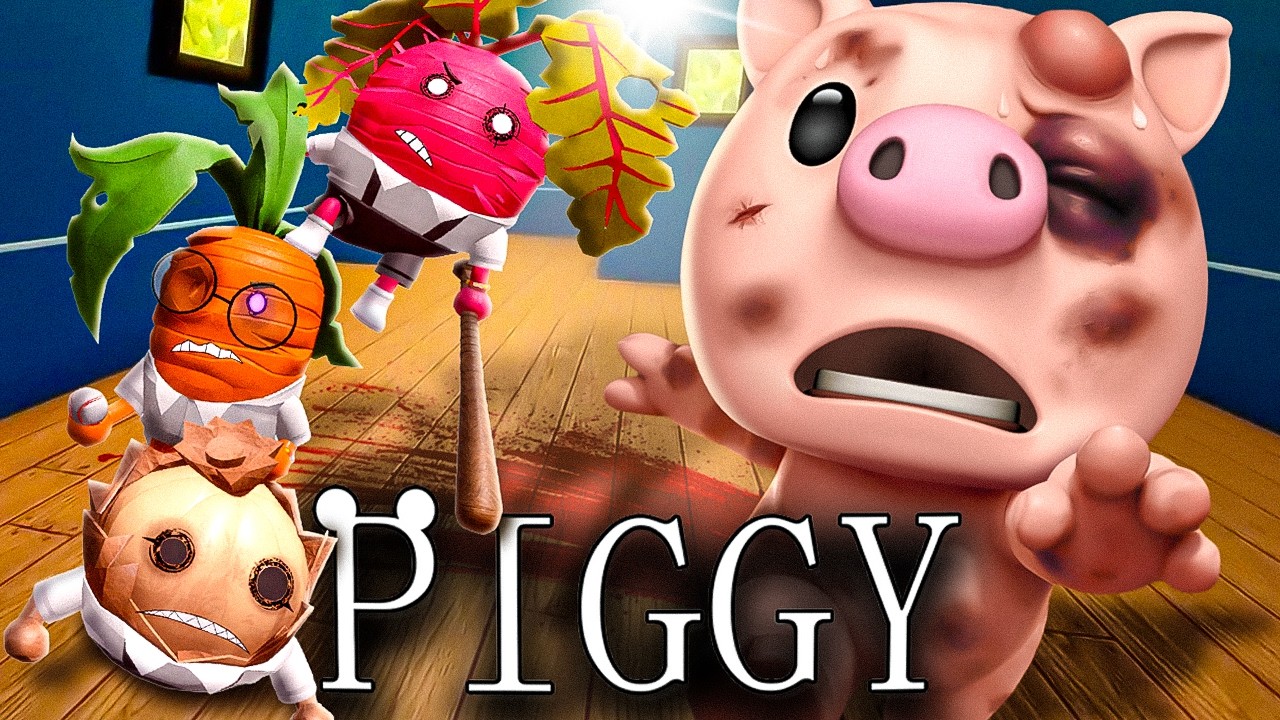
Roblox Piggy is usually described as a combination of horror, escape rooms, multiplayer survival, and story driven mystery. All of those descriptions are accurate, but they do not fully explain why its chapters become satisfying to master. The deeper challenge is organization.
Players enter an unfamiliar building filled with objects whose purposes are initially unclear. They must learn which key opens which door, which tool reveals the next object, where that object needs to be carried, and whether the route back remains safe while Piggy moves through the same corridors. Every chapter is therefore a chain of dependencies disguised as a collection of rooms.
The first attempt feels confusing because the chain is invisible. Later attempts become smoother as players understand how discoveries connect, which objects should remain where they were found, and which routes preserve enough flexibility to survive an interruption.
Multiplayer can shorten this process when information is shared and work is divided, but it can also make the chapter more difficult when players duplicate searches, hide useful items, or move Piggy into routes others were relying upon. Piggy creates horror through pursuit, yet it creates mastery through memory. Escaping does not become easier simply because you learn where every room is. It becomes easier when you understand why you need to enter each room and what the discovery inside will allow everyone to do next.
Frequently Asked Questions
Is Roblox Piggy worth playing in 2026?
Yes, particularly for players who enjoy escape puzzles, horror themes, multiplayer cooperation, map learning, item based progression, and an ongoing story told across multiple chapters.
What is the main objective in Piggy?
Players search the map for keys, tools, and puzzle items that gradually unlock the exit while avoiding Piggy and completing any chapter specific requirements.
Why do new players often feel lost?
Piggy does not immediately explain the full item chain, so beginners may find objects without knowing where they belong or revisit rooms that have already been fully searched.
How can players improve faster?
They should remember which items open particular areas, learn safe return routes, avoid carrying objects without a destination, and pay attention to what teammates have already completed.
Is Piggy better with a team?
It can be. Several players can search different areas and complete the item chain faster, although poor coordination may scatter essential objects or cause everyone to repeat the same work.
Why are dead ends dangerous?
They provide only one escape route, so players entering without knowing Piggy’s location can become trapped before finishing the search or using the item they carried inside.
Does memorizing the map remove all difficulty?
No. Map knowledge helps considerably, but Piggy’s movement, traps, teammate behavior, misplaced items, and changing route safety can still disrupt a familiar plan.
What gives Piggy long term replayability?
Its chapters combine puzzle dependencies, different enemy behavior, multiplayer unpredictability, story progression, alternate modes, and the satisfaction of turning an initially confusing map into an escape route the player understands completely.