



1. The Map Never Stays Neutral After the First Shots Are Fired
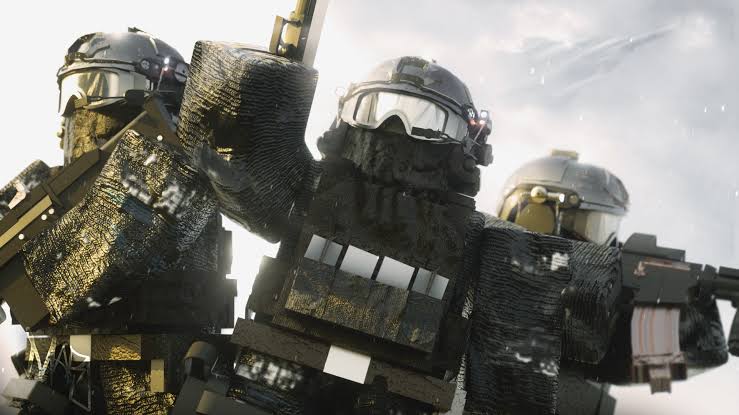
At the beginning of a Phantom Forces match, every route appears theoretically available. Streets, rooftops, stairways, interior rooms, long corridors, and elevated positions all present possibilities, but the first exchanges immediately begin changing their meaning. A burst of automatic fire from one side reveals activity, a sniper shot makes an exposed lane harder to cross, while several teammates disappearing near the same objective suggest that a route has already become dangerous.
This information is incomplete, but ignoring it usually leads to predictable deaths. Players who move according to the static layout may repeatedly enter the same occupied angle, whereas experienced players treat recent events as a temporary layer placed over the physical map. A hallway is not dangerous simply because it is narrow. It becomes dangerous because gunfire, teammate movement, and recent deaths suggest someone is currently prepared to punish anyone who enters it.
That temporary layer changes constantly. An enemy holding a rooftop may relocate after firing, a successful push may clear a route that was unsafe seconds earlier, and an apparently quiet flank can become the main attack path once both teams shift toward another part of the map.
Phantom Forces becomes much deeper when players stop memorizing only where routes lead and begin reading what those routes currently contain.
2. Gunfire Reveals More Than the Location of One Opponent
Weapon audio is usually treated as atmosphere or confirmation that combat is occurring nearby, but in Phantom Forces it also provides a continuous stream of battlefield information. The direction, distance, rhythm, and intensity of gunfire can suggest whether a player is holding an angle, moving through several targets, fighting at close range, or exchanging shots across a longer lane.
A single sound rarely provides certainty, yet several sounds together can shape a useful prediction. Sustained fire followed by silence may indicate that one side won the exchange, while repeated sniper shots from the same area suggest that crossing the corresponding sightline remains risky. Suppressed weapons complicate these judgments by reducing clarity, but even uncertainty has value because it encourages players to approach differently rather than assuming the route is empty.
The weapon itself can also hint at the kind of space an opponent prefers. A close range setup is more likely to appear around interiors and tight corners, while a long range weapon becomes more dangerous when the player has access to open lanes and elevation. These expectations should never become rigid rules, since experienced opponents deliberately move outside ideal conditions, but they help reduce the number of possibilities that must be considered at once.
Every shot can eliminate a target, yet it also tells the surviving players something about the person who fired it. The stronger player is often the one who benefits from that information without immediately exposing just as much in return.

3. Teammate Deaths Are Warnings, Not Merely Changes to the Scoreboard
Watching teammates disappear from the battlefield can feel like background information during a fast match, especially when new engagements begin every few seconds. Those deaths are valuable because they identify where resistance is occurring and how quickly an enemy may be advancing.
One teammate dying near a corner could result from an isolated mistake. Several teammates falling along the same route usually indicate a larger structural problem, such as an occupied sightline, a strong defensive position, or an enemy push that has already broken through the area.
Following the same route without changing anything rarely solves that problem. Players need to decide whether they can challenge the position with better preparation, approach from another angle, or wait until teammates create enough pressure elsewhere to divide the defenders’ attention.
The location of friendly deaths can also protect players from threats they never directly saw. If someone ahead suddenly disappears, slowing down before entering the same doorway may prevent another immediate elimination. In this way, even unsuccessful teammates contribute information to everyone behind them.
Phantom Forces rewards players who interpret a death before attempting to avenge it. Reacting emotionally produces another body in the same location, while reading the event can reveal how the opponent expects the next engagement to happen.
4. An Empty Route Can Be More Suspicious Than a Busy One
Visible combat feels dangerous because the threat is obvious, while quiet areas appear safer because nobody is currently shooting through them. Experienced players eventually learn that silence can carry several meanings, and some of them are more dangerous than open fighting.
A route may be empty because both teams are focused elsewhere, creating a genuine opportunity to flank. It may also be empty because an opponent is waiting without firing, allowing players to enter a prepared position before revealing themselves. The difference cannot always be known in advance, so movement through quiet areas requires attention to entrances, likely defensive angles, and whether the route fits the current flow of the match.
This is where map knowledge becomes practical rather than academic. Remembering corners and staircases is useful, but understanding which positions overlook them allows the player to clear space in a sensible order. Entering a quiet building without checking the places that control its exits turns silence into a trap.
The timing of that silence matters as well. A normally active lane becoming quiet may suggest that opponents have rotated, while a forgotten side route remaining unused for too long can become valuable precisely because nobody expects pressure from it.
Flanking works when the player recognizes an opening before the other team updates its understanding of the map. Arriving too late means entering a route that is no longer empty, even if the original idea was correct.

5. Winning an Engagement Can Make the Next Position More Dangerous
Eliminating an opponent creates an immediate sense of control, but the position where the fight occurred may already be compromised. Gunfire has revealed the area, the defeated player may have teammates nearby, and anyone watching the kill feed or listening to the exchange can begin preparing for the surviving attacker.
Remaining in place can be effective when the position provides strong cover and several approaches can be monitored, yet repeating the same angle makes the player increasingly predictable. Opponents know where the previous shots came from, and the next engagement may begin with them aiming at that location before the survivor has even seen them.
This makes movement after a kill an important part of Phantom Forces. Relocating does not always require crossing half the map because even a small change in elevation, cover, or angle can force the next opponent to search again. The purpose is to prevent old information from remaining accurate.
Aggressive players face the opposite risk when they move too quickly after every elimination. Chasing the next target without checking ammunition, health, nearby routes, or teammate positions can turn a successful fight into an immediate trade.
A kill changes the map because it removes one opponent and reveals one survivor. Strong players understand that both consequences matter.
6. Weapon Builds Change Which Information You Can Safely Act On
Phantom Forces offers an enormous range of possible weapon loadouts, but attachments and weapon choices matter most when they support the distances and decisions a player repeatedly encounters. The official Roblox listing emphasizes its extensive loadout possibilities alongside multiple modes and environments, yet variety alone does not make every configuration equally suitable for every route or role.
A close range build allows players to act confidently on information about enemies inside buildings or around tight objectives, but the same setup may offer few answers when the threat controls a long open lane. A weapon designed for stability and distance makes certain sightlines more usable, while slower handling can create problems when the player enters spaces where engagements begin with little warning.
This relationship explains why copying a popular build does not guarantee similar results. A strong configuration may assume that the user maintains particular distances, controls recoil in a certain way, or understands when to avoid unfavorable routes. Someone with different habits can make the same setup feel inconsistent.
Attachments should therefore solve recurring problems rather than follow popularity automatically. If a player repeatedly loses because the weapon becomes difficult to control at common engagement distances, improving consistency may matter more than maximizing theoretical damage. If slow handling prevents the gun from becoming ready in time, additional long range precision may not address the actual weakness.
The best loadout is not simply the one with the strongest statistics. It is the one that allows the player to act on battlefield information without constantly entering conditions the weapon was never meant to handle.

7. Objectives Reshape the Battlefield Even When Nobody Is Standing Directly on Them
Objective modes create obvious destinations, but their influence extends beyond the marked area because both teams adjust their movement around the expectation that players will eventually approach it. Nearby buildings become firing positions, flanking routes become more valuable, and long sightlines gain importance when they control access rather than the objective itself.
This is why running directly toward the marker can feel productive while contributing very little. A player may reach the correct area repeatedly but enter through a route the opposing team already controls, producing eliminations without creating meaningful pressure.
Strong objective play often begins one step away from the objective. Clearing an overlooking position, controlling an entrance, or forcing defenders to face another direction can make the final capture much easier for teammates. The contribution may not appear immediately on the scoreboard, but it changes how safely the team can occupy the important space.
Defenders face a similar challenge because remaining too close to the objective can make them easy to surround. Spreading into nearby positions provides earlier information about incoming attacks, although extending too far may leave the central area unprotected.
The objective gives the match direction, while the surrounding terrain determines whether either team can approach that direction safely.
8. Phantom Forces Is Most Rewarding When You Begin Predicting the Next Fight
New players experience Phantom Forces as a sequence of surprises. An opponent appears in a window, another crosses behind them, someone fires from a rooftop, and each death seems to come from a location that was impossible to monitor.
With experience, those encounters begin feeling less random. Players recognize where enemies usually move after taking an objective, which routes become vulnerable when teammates push too far, and how recent gunfire changes the likelihood of meeting someone around the next corner.
Prediction does not remove the need for aim. The player still has to control the weapon, manage recoil, react to movement, and win the exchange once the opponent appears. The difference is that mechanical execution becomes easier when the crosshair is already near the correct position and the player has chosen a distance that suits the loadout.
This is also why experienced players can appear to know where everyone is without using perfect information. They are combining partial clues: one teammate died, another route became quiet, several enemies were recently seen near an objective, and the current spawn flow makes one approach more likely than the others.
These predictions are sometimes wrong, and Phantom Forces can punish certainty when opponents choose unusual routes or spawn patterns shift unexpectedly. Its fast pace, broad weapon selection, balance changes, and occasional spawn pressure can create frustrating deaths even when the player reads most of the situation correctly.
The game remains compelling because knowledge improves probability rather than guaranteeing safety. You rarely know exactly where the next opponent is, but you can become much better at understanding where they have a reason to appear.

Conclusion
Phantom Forces initially looks like a game decided by reaction speed, weapon choice, recoil control, and the ability to place accurate shots before an opponent does. Those skills remain essential, but they occur inside a larger contest over information. Every gunfight leaves evidence.
Shots reveal directions and preferred distances. Teammate deaths identify dangerous routes. Empty areas suggest opportunities or traps, while a successful elimination tells the opposing team where the survivor was standing. Objectives pull both teams toward predictable spaces, and weapon builds determine which of those spaces each player can challenge comfortably. The map is therefore never limited to its buildings, streets, corridors, and rooftops.
A second map exists on top of the physical one, built from everything that happened during the previous few seconds. That version contains likely enemy positions, recently exposed angles, weakened routes, open flanks, and areas where too much information has already been revealed.
Players who read only the physical map may have excellent aim and still enter fights from predictable positions. Those who understand the changing information layer begin arriving earlier, aiming closer to the right place, and leaving positions before the enemy can use old evidence against them. Phantom Forces does not become slower as players improve. It becomes easier to read. The fastest gunfight is often won by the person who understood where it was going to happen before either player appeared on the other’s screen.
Frequently Asked Questions
Is Phantom Forces worth playing in 2026?
Yes, particularly for players who enjoy competitive first person shooters, extensive weapon customization, varied maps, multiple modes, movement, positioning, and gradually improving through both mechanical skill and battlefield awareness. The official Roblox experience remains listed under StyLiS Studios.
Is Phantom Forces difficult for beginners?
It can be challenging because established players often possess stronger map knowledge, refined weapon builds, and better awareness of common routes, but beginners can improve by learning one map and a small selection of dependable weapons at a time.
Is aim the most important skill in Phantom Forces?
Aim is essential, although positioning and prediction often determine how difficult the shot will be. Entering an engagement with the crosshair prepared and suitable cover nearby reduces the amount of raw reaction speed required.
How important is sound?
Sound can reveal the direction, distance, rhythm, and likely scale of nearby combat, helping players estimate where enemies are active even when nobody is directly visible.
Should players stay in the same position after getting a kill?
Not automatically. Remaining can work when the position is defensible, but firing reveals information, so changing the angle or relocating may prevent the next opponent from preparing for the exact same spot.
Are popular weapon builds always the best choice?
No. A build performs best when it supports the player’s preferred ranges, movement, recoil control, and role, so a popular configuration may feel ineffective when used under different conditions.
How can players improve their map awareness?
They should watch teammate deaths, listen to gunfire, remember common sightlines, notice which routes have become unusually quiet, and consider how objectives are influencing the movement of both teams.
What gives Phantom Forces long term replayability?
Its combination of weapon loadouts, attachments, maps, modes, movement, changing team behavior, and unpredictable engagements allows familiar locations to produce different tactical problems from one match to the next.